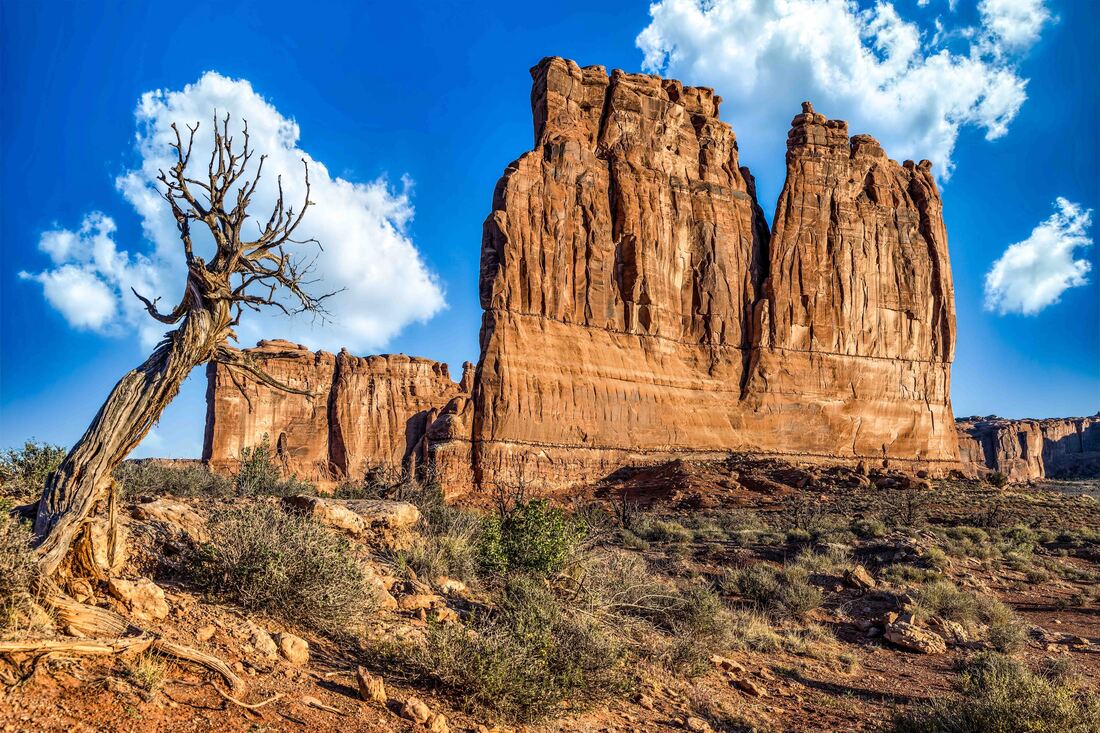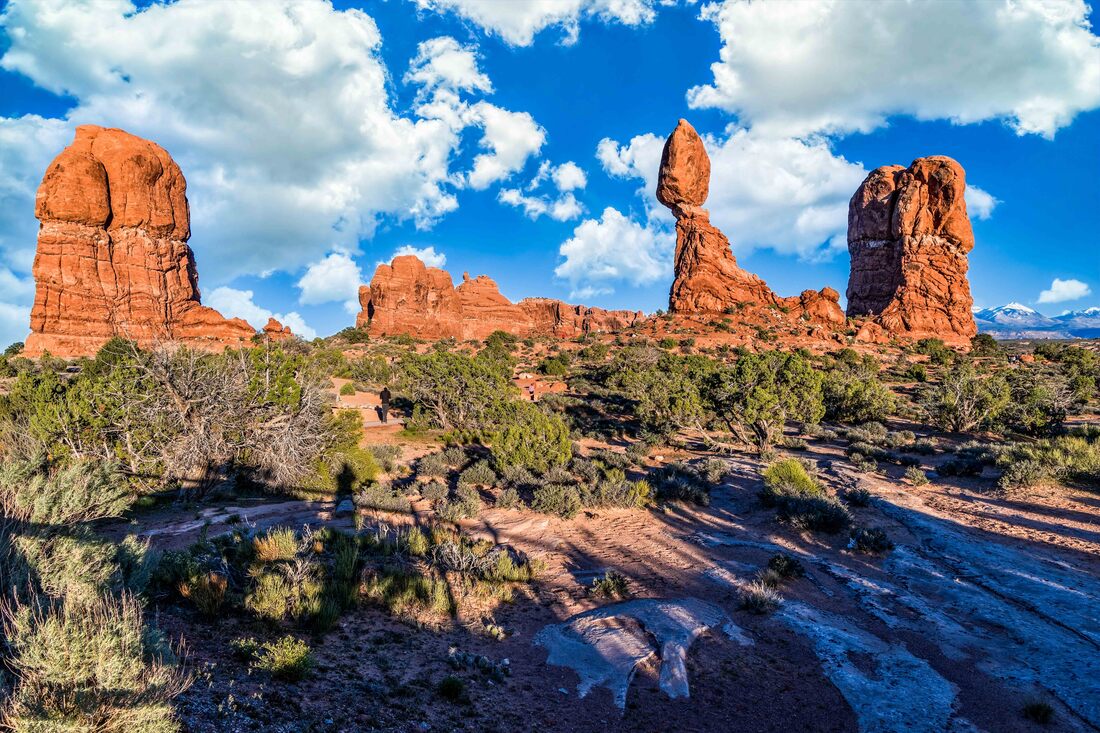
Arches National Park (Intro Part II) Courthouse Rock
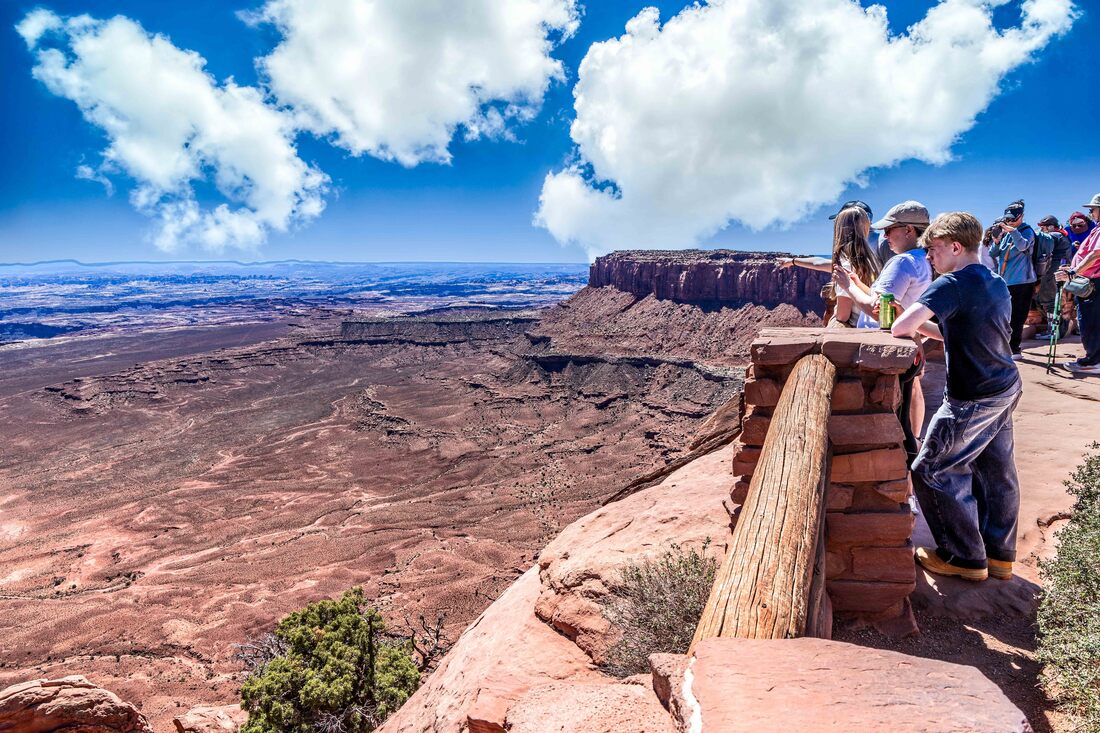
Canyonlands National Park and Dead Horse Point State Park
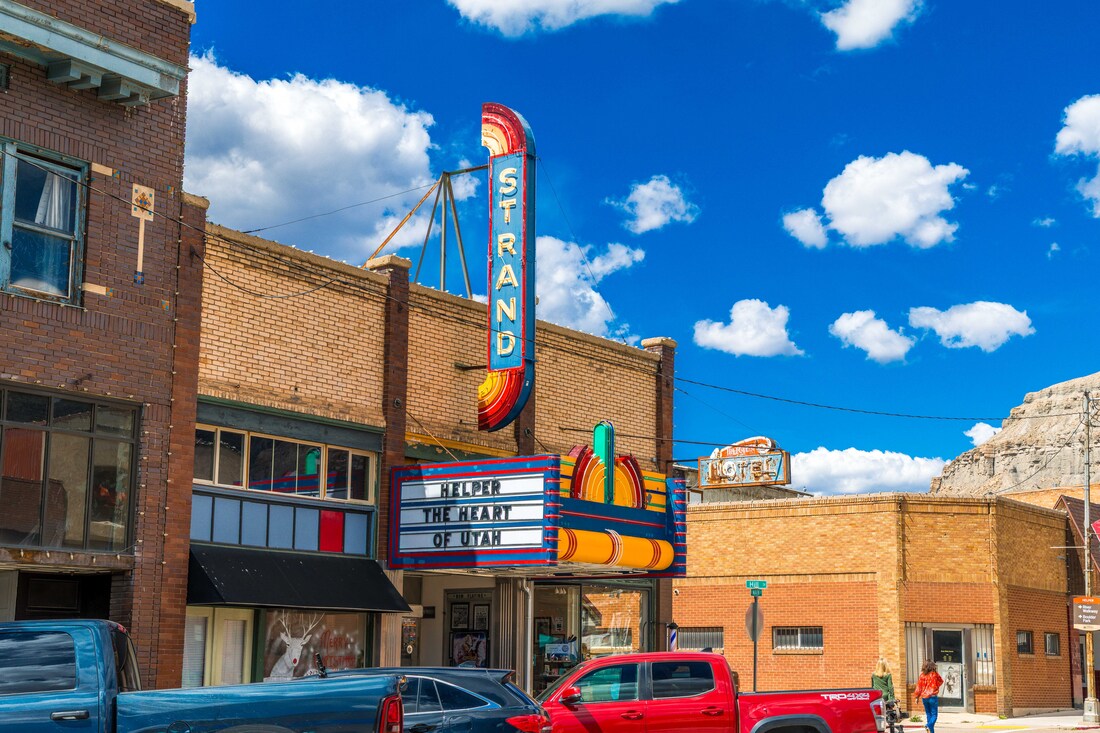
Helper, Utah (pop 2,250)
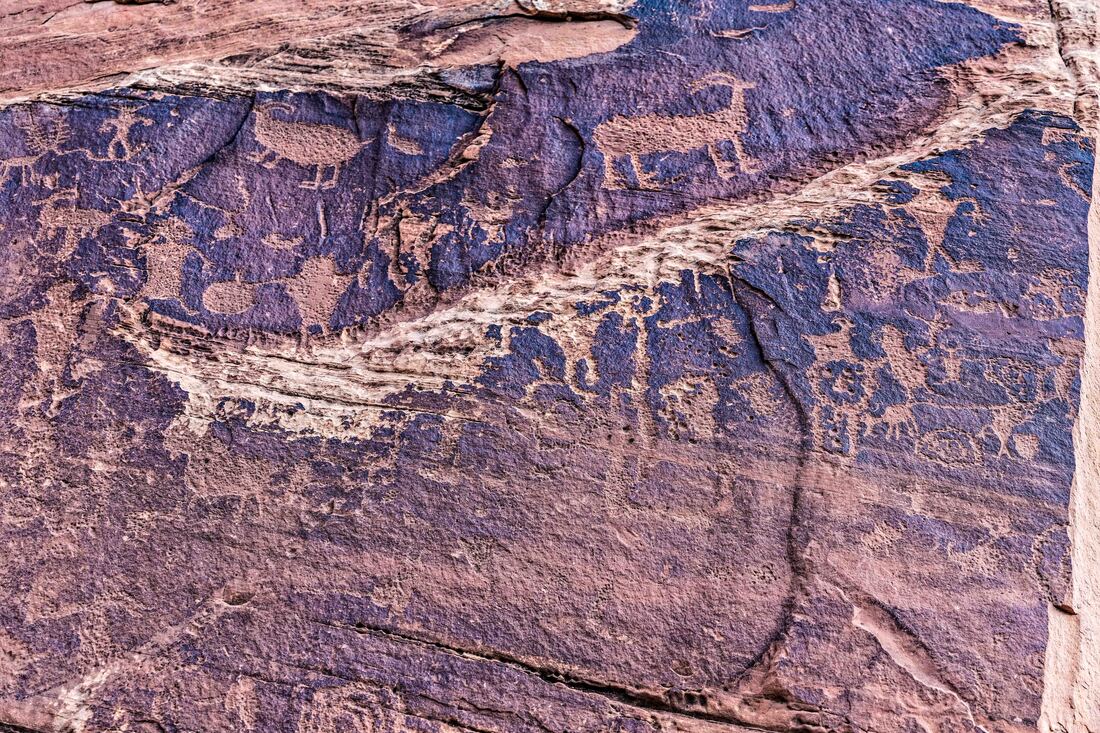
Petroglyphs on Utah State Route 279
The Utah Desert: 2026 Arches and Canyonlands National Parks
At the beginning of April this year, I took my third (I think) trip to the Utah desert, to Arches and Canyonlands National Parks. Most of you who know me know my love of deserts, and these two national parks are probably, so far, my favorite desert landscapes.
I spent about a week, coming and going, from Portland to Utah, passing through Boise, Ogden, and Salt Lake City, finally arriving in Moab, Utah, which is the gateway town to the parks. Moab used to be a small, quiet, western town, with one chain motel, the Best Western. Today it is quite a different story. In recent years, the town has been "discovered," and its lively downtown now includes high-end eateries and every possible motel chain (I stayed at the Hampton Inn). While the town has a year-round population of only about 5,000, the parks, with the town, welcome 2 to 3 million visitors annually.
When I first visited these two remote national parks in the mid-80s, they were almost empty of visitors and tourists. Today, like the town, they too have been discovered, though my visit in early April (still low season with school in session), was not too crowded. You won't see many people in my pictures.
One of the fun aspects of my trip was "breaking in" my new camera. I'm a "Canon" camera guy, and I loved my old camera (an SLR with a professional lens). But times have changed, and companies today are no longer making cameras with a "mirror" in them (the "R" in SLR). Cameras today are "mirrorless," and the viewfinder is a digital image. Last fall, Canon produced its latest, the R6 Mark III, and I bought it. All the pictures on this Utah adventure were taken with the new camera . . . and, I think they turned out pretty well!
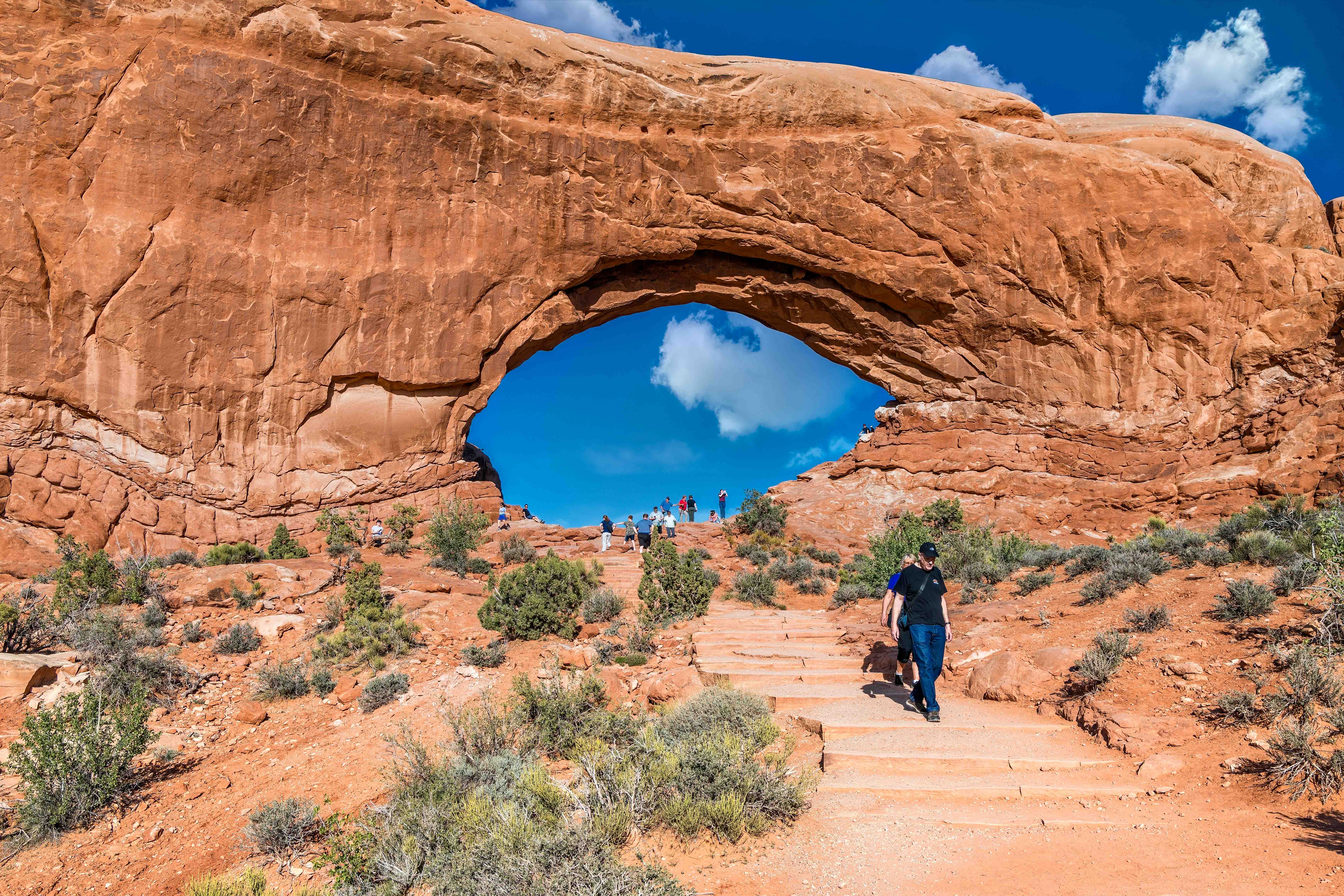
A little bit about the parks. Arches is in eastern Utah, a little north of Moab, on the Colorado River. The park contains more than 2,000 natural sandstone arches—the highest density of natural arches in the world. The national park lies above an underground salt bed, which is the main cause of the formation of the arches, balanced rocks, and eroded monoliths in the area.
Canyonlands is also in eastern Utah, near Moab. This national park is much larger than Arches (527 square miles), and it is mostly remote in terms of visitors. The Colorado and the Green Rivers meet in its heart, dividing the park into three regions. The park preserves a colorful landscape eroded into numerous canyons, mesa, and buttes. Edward Abbey, the author, described the Canyonlands as "the most weird, wonderful, magical place on earth—there is nothing else like it anywhere."
Not far from Moab is the "Potash Road Rock Art Site" (the pic to the left). This site is home to ancient petroglyphs, some dating as far back as 6,000 B.C. The desert varnish (or patina) on the rock made a perfect surface for various Native American groups to create petroglyphs. The site was discovered when Utah SR 279 was being built along the Colorado River. At the site I visited, the oldest petroglyphs are at least 3,000 years old.
Click the pictures on the left to access the website pages. For a (fairly) quick rundown of my whole trip, click the "Highlights" button below, and enjoy!